Digital technology has made financial transactions faster, more convenient and accessible than ever before. From online banking and mobile payments to digital lending and e-commerce, individuals and businesses increasingly depend on digital platforms to manage their financial activities.
However, this convenience has also created new opportunities for financial fraud. Cybercriminals are using increasingly sophisticated methods to deceive customers, access confidential information and carry out unauthorised transactions.
Financial fraud is no longer limited to traditional banking activities. It can affect businesses, financial institutions, NBFCs, startups and individual customers through phishing, identity theft, payment fraud and other digital threats.
For organisations operating in today’s connected economy, preventing financial fraud requires more than basic security measures. It demands effective monitoring, stronger authentication, employee awareness and responsible use of technology.
In this article, we explore the major types of digital financial fraud, the challenges organisations face and the best practices businesses can adopt to protect financial information and transactions.
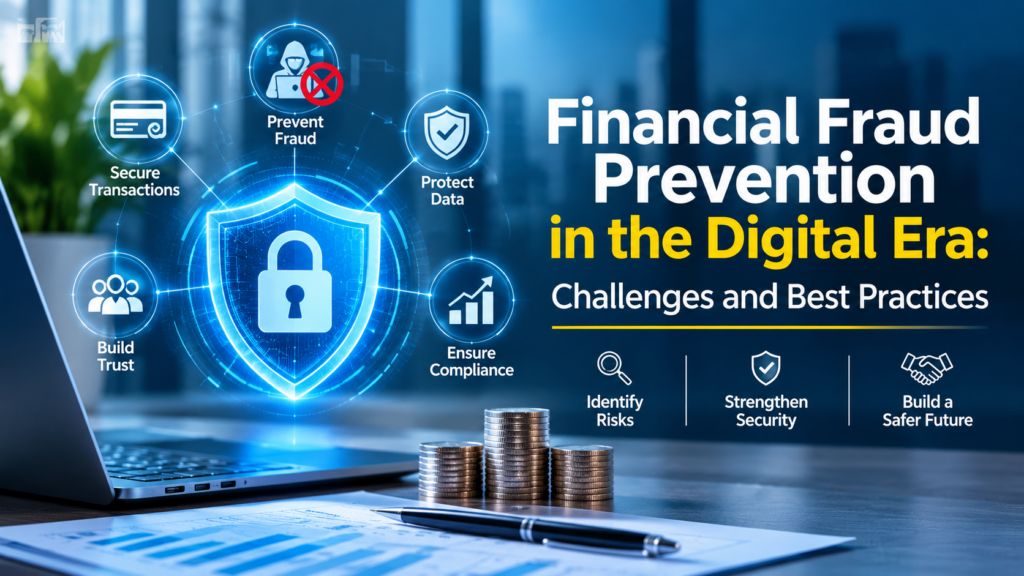
What Is Financial Fraud in the Digital Era?
Financial fraud refers to dishonest or illegal activities carried out to obtain money, financial information or other economic benefits.
In the digital environment, fraudsters use online platforms, electronic communication, compromised accounts and technology-based techniques to deceive individuals or organisations.
Common examples include:
- Unauthorised online banking transactions.
- Phishing emails and fraudulent websites.
- Identity theft and impersonation.
- UPI and digital payment fraud.
- Credit and debit card fraud.
- Loan application and identity fraud.
- Business email compromise.
- Investment and financial scams.
As digital financial services continue to expand, businesses need to understand these threats and establish appropriate prevention measures.
Why Is Financial Fraud Prevention Important?
Financial fraud can create consequences that extend beyond immediate monetary losses. It can affect customer confidence, business relationships, operational continuity and an organisation’s reputation.
Effective fraud prevention is important for several reasons.
1. Protecting Financial Assets
Strong security controls help prevent unauthorised access to accounts, payment systems and business funds.
2. Maintaining Customer Trust
Customers expect financial institutions and businesses to protect their personal and financial information. Effective fraud prevention helps maintain that confidence.
3. Reducing Operational Losses
Fraud incidents can result in financial losses, investigation expenses, recovery costs and additional administrative work.
4. Protecting Business Reputation
A major fraud incident can damage an organisation’s credibility and affect relationships with customers, suppliers and business partners.
5. Supporting Regulatory Compliance
Financial institutions must follow applicable regulatory requirements relating to customer protection, transaction monitoring, information security and fraud reporting.
7 Common Types of Digital Financial Fraud
Understanding how financial fraud occurs helps businesses and individuals recognise warning signs before serious damage takes place.
1. Phishing and Email Fraud
Phishing involves fraudulent emails, messages or websites designed to trick individuals into sharing passwords, banking details or other confidential information.
Fraudsters often impersonate banks, financial institutions or trusted service providers.
Prevention: Verify the sender, avoid suspicious links, never share confidential credentials and use appropriate email security controls.
2. UPI and Digital Payment Fraud
Digital payment fraud may involve fake payment requests, fraudulent QR codes, impersonation or manipulation of users into authorising transactions.
Prevention: Verify payment requests, check transaction details before approval and never share UPI PINs or OTPs.
3. Identity Theft
Identity theft occurs when someone uses another person’s personal information without permission to obtain financial benefits or access services.
This may involve stolen identity documents, personal details or compromised accounts.
Prevention: Protect identity documents, use secure verification processes and monitor suspicious account activity.
4. Credit and Debit Card Fraud
Card fraud involves unauthorised use of payment card information to make purchases or financial transactions.
Card details may be compromised through fraudulent websites, data breaches or social engineering.
Prevention: Use trusted payment platforms, enable transaction alerts and report suspicious card activity immediately.
5. Loan and Credit Application Fraud
Fraudsters may use fabricated documents, stolen identities or misleading financial information to obtain loans or credit facilities.
This is particularly relevant to banks and NBFCs involved in digital lending.
Prevention: Strengthen KYC procedures, verify customer information and use appropriate credit assessment and fraud detection systems.
6. Business Email Compromise (BEC)
Business Email Compromise occurs when criminals impersonate executives, employees or suppliers to manipulate financial transactions.
For example, an organisation may receive a fraudulent email requesting that an upcoming supplier payment be transferred to a different bank account.
Prevention: Independently verify payment instructions and introduce approval procedures for changes to beneficiary details.
7. Investment and Online Financial Scams
Fraudulent investment schemes often attract victims through unrealistic return promises, fake trading platforms or misleading financial advertisements.
Prevention: Verify the credentials of financial service providers, research investment opportunities and avoid decisions based on guaranteed-return claims.
Major Challenges in Preventing Financial Fraud
Although technology has improved financial security, preventing fraud remains a continuous challenge.
Increasingly sophisticated fraud techniques: Criminals regularly change their methods, making fraudulent messages and transactions harder to identify.
Human error: Employees and customers may unintentionally share confidential information or approve suspicious transactions.
Growing digital transaction volumes: High transaction volumes make continuous monitoring and timely identification of suspicious activities more challenging.
Identity verification difficulties: Fraudulent documents and impersonation attempts can create challenges during digital customer onboarding.
Third-party security risks: External service providers and technology partners may introduce additional vulnerabilities.
Limited security awareness: Organisations without regular employee training may remain exposed to preventable fraud attempts.
Addressing these challenges requires a combination of technology, employee awareness and strong internal procedures.
8 Best Practices for Financial Fraud Prevention
Businesses and financial institutions should adopt a structured approach to protect transactions, accounts and customer information.
1. Strengthen Customer Verification
Implement appropriate Know Your Customer (KYC) procedures and identity verification checks to reduce impersonation and fraudulent account creation.
2. Implement Multi-Factor Authentication
Multi-factor authentication adds another layer of protection by requiring additional identity verification beyond a password.
3. Monitor Financial Transactions
Use suitable transaction monitoring systems to identify unusual payment patterns, suspicious activities and potentially unauthorised transactions.
4. Conduct Regular Security Assessments
Review digital platforms, payment systems, applications and internal security procedures to identify weaknesses.
5. Train Employees and Customers
Conduct regular awareness programmes covering phishing, social engineering, payment fraud and safe handling of financial information.
6. Establish Strong Internal Controls
Introduce payment approval procedures, access restrictions, transaction verification and regular financial audits.
7. Use Advanced Fraud Detection Technology
Artificial intelligence and machine learning can help analyse transaction patterns, identify unusual behaviour and support fraud investigation.
However, automated systems should be regularly reviewed to maintain accuracy and reduce false alerts.
8. Develop a Fraud Response Plan
Organisations should establish clear procedures for reporting suspicious transactions, restricting compromised access, investigating incidents and communicating with affected customers.
A timely response can help limit potential losses and improve recovery efforts.
The Role of Technology in Modern Fraud Prevention
Technology is becoming an important part of financial fraud prevention, particularly for banks, fintech companies and NBFCs.
Some important technologies include:
- Artificial Intelligence (AI): Helps analyse transaction patterns and identify potentially suspicious behaviour.
- Machine Learning (ML): Supports the detection of unusual financial activities by identifying patterns in historical data.
- Biometric Authentication: Uses approved biometric verification methods to strengthen identity checks.
- Real-Time Transaction Monitoring: Helps financial institutions review transactions and identify potential fraud indicators.
- Data Analytics: Provides insights into customer behaviour, payment patterns and emerging fraud trends.
- Encryption: Protects sensitive financial information during storage and transmission.
These technologies can strengthen fraud prevention, but their effectiveness depends on proper implementation, data quality, monitoring and human oversight.
Financial Fraud Prevention in Banking, Finance and NBFC Sectors
Banks, financial institutions and NBFCs handle sensitive customer information and large volumes of financial transactions. This makes fraud prevention an essential part of their operational and risk management activities.
Some important areas requiring attention include:
Digital lending security: Verify borrower identities and maintain appropriate checks throughout the loan application process.
Transaction monitoring: Identify unusual financial activities and suspicious payment patterns.
Customer data protection: Protect personal, banking and financial information from unauthorised access.
Credit risk assessment: Evaluate borrower information carefully to reduce exposure to fraudulent loan applications.
Employee awareness: Train teams to recognise impersonation, suspicious requests and internal security risks.
Regulatory compliance: Follow applicable RBI directions and other relevant financial security requirements.
A proactive approach helps financial institutions protect customers, maintain operational reliability and strengthen trust in digital financial services.
Conclusion: Building a Safer Digital Financial Environment
Financial fraud has become an important challenge in today’s technology-driven business environment. As digital payments, online banking and financial services continue to grow, protecting financial transactions and confidential information requires consistent attention.
From phishing and identity theft to payment fraud and fraudulent loan applications, organisations must understand the risks and adopt appropriate prevention strategies.
Strong authentication, transaction monitoring, employee awareness, customer verification and effective internal controls can significantly strengthen financial security.
Ultimately, financial fraud prevention is not the responsibility of technology teams alone. It requires cooperation between management, employees, customers and financial service providers.
Businesses that make fraud prevention an ongoing priority will be better positioned to protect their resources, maintain customer confidence and support sustainable growth.
At Suvrion Consulting, we recognise the growing importance of technology, financial awareness and professional capabilities in today’s business environment. As the banking, finance, IT and NBFC sectors continue to evolve, responsible digital practices remain essential for long-term business development.
Visit Suvrion.com to explore our professional business solutions.
Frequently Asked Questions (FAQs)
1. What is financial fraud prevention?
Financial fraud prevention refers to the policies, technologies and practices used to identify, prevent and reduce fraudulent financial activities and unauthorised transactions.
2. What are the most common types of digital financial fraud?
Common types include phishing, UPI fraud, identity theft, card fraud, loan application fraud, business email compromise and online investment scams.
3. How can businesses prevent financial fraud?
Businesses can strengthen customer verification, implement multi-factor authentication, monitor transactions, train employees, conduct security assessments and establish strong internal controls.
4. What is the role of AI in financial fraud detection?
AI can analyse large volumes of transaction data, identify unusual patterns and help financial institutions detect potentially suspicious activities more efficiently.
5. Why is fraud prevention important for NBFCs?
Fraud prevention helps NBFCs protect customer information, reduce fraudulent loan applications, monitor financial transactions, control operational risks and maintain customer trust.
6. What should someone do after experiencing digital financial fraud in India?
Contact the bank or payment service provider immediately, report the incident through the official cybercrime helpline 1930 and submit a complaint through the National Cyber Crime Reporting Portal at cybercrime.gov.in. Preserve transaction details and other relevant evidence.